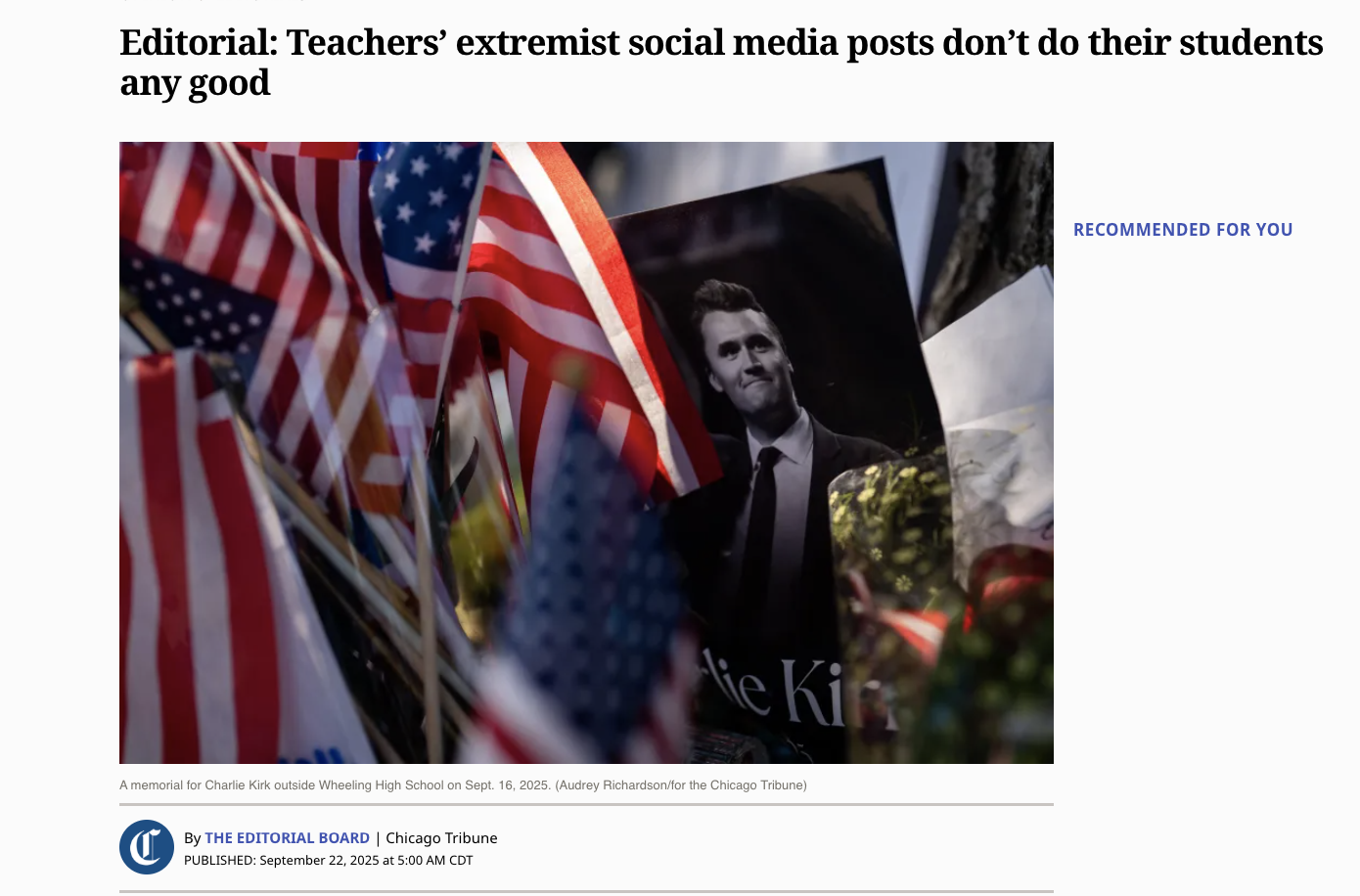
The Chicago Tribune Editorial Board called me an “Extremist Educator”: Time to Teach

Brrriiinnnggg  (school bell ringing), class is in session. 

Good morning everyone, my name is Mr. Stieber (sounds like Bieber) and I will be your teacher today. 

Across the country attacks on free speech continue. After Charlie Kirk was murdered, I watched for two days and observed. I saw HBCU’s go on lockdown due to racist threats made against Black students. I saw how MAGA blamed liberals, and blamed the LGBTQIA+ community all falsely for Charlie Kirk’s death. I saw how groups like Libs of Tik Tok, Corey DeAngelis, and Laura Loomer targeted educators who said anything critical about Charlie Kirk. I watched and observed as this unfolded, then, I decided to speak up. I spoke up because my mom, a former educator, and the people who I have always admired throughout history, would want me to speak up. I spoke up as an educator, as a parent and in this case most importantly as a white male. I posted on social media that “America is founded on violence, no one should be killed, Charlie Kirk said horrible things about people and that White cis males are the biggest threat to our country.” I didn’t say this in school. I said this at home and posted it online. 

The part that really triggered the Chicago Tribune Editorial Board was, “White cis males are the biggest threat to our country”, they even pulled this quote for their article. As a white cis male myself who also studies and teaches history, I know it is people who look like me, White males, who have colonized, enslaved, Manifest Destined, Trail of Teared, Louisiana Purchased, Westward Expanded, Guadeloupe Hidalgo’ed, Chinese Excluded, Jim Crowed, Segregated, Interment Camped, Red Lined and Gentrified nearly every group of people in our country’s history. 

This white male violence isn’t past tense. I see how too many white males have responded on the police force through police brutality. I see how political violence is white male associated, how school shooters are overwhelmingly white males. It is so clear that the Trump administration ordered the DOJ to remove studies confirming this.

Now the Tribune Editorial Board instead of, you know, paying attention to history, has decided to use their anonymity to write a hit piece implying that I and other educators cannot separate our personal time from our professional time.  They suggest that if educators have political opinions that we can’t be a fair and impartial teachers. They even made a heap of false assumptions about what my classroom is like.

Okay Trib. Board, you called me an extremist, so I will do what a good teacher does and break this down for you. I’m “extremist” because for the last 19 years of my career I’ve worked to use my privilege and writings to speak up about school closings, lack of funding for our schools, police violence, losing students, housing students, and ways to improve our city for all. Extremist.

I’ve worked hard to get my master’s degree in urban education policy and to become a National Board Certified history teacher, which is the highest credential a teacher can achieve. Extremist. 

I give students a space to process, talk through and debate history. Extremist.

I’ve helped kids gain their voice through poetry. I’ve helped students feel safe and seen while helping them achieve their goals of college and life success. Extremist.

Honestly, this isn’t about me and no credential or story of student success matters because it goes against the narrative, because this attack has a goal to silence educators. You see throughout history during times of authoritarianism, educators are always attacked early, scared into silence, fired, and threatened into submission.  Why are they so concerned with us?  

Teaching is an incredibly personal profession. We work to get to know the students to make them feel safe and seen, so we can challenge them to learn more. So when we are threatened our entire identities are attacked, not just our profession. 

Spoiler – educators don’t live at school (like many of us thought when we were younger). We are people outside of school. We are part of the community, we are parents, we are members of congregations, and neighborhood clubs. We are respected by those who know us. As educators, we see how the world treats our students. We know that we aren’t just teaching our students in the classroom, we are teaching society about our students and their needs. We are morally compelled to advocate for our students while they are in our classroom,and as they grow into adult members of our society. 

Educators love our students which is why we will fight like hell to keep them safe from ICE, the National Guard, or any other threat that comes their way. We may be full of bad jokes, grey hair, and bald heads, but we are also full of a strong desire to keep kids safe, educated and protected so that we will put ourselves on the line for them.

Charlie Kirk had a list of educators and professors he wanted fired because they used their free speech to critique society and government. Many of these educators experienced threats from his followers.

Did the Tribune Editorial Board speak about this? No.

Did the Tribune Editorial Board write about how HBCU’s were being threatened or the terrible things Charlie Kirk said about Black people?

No.

Did the Tribune Editorial Board write about how Stephen Miller recited and essentially plagiarized a speech by the Nazi Joseph Goebbell at the Charlie Kirk memorial?

No.

In the last few weeks I was attacked by the followers of Libs of Tik Tok, The Morning Answer, and Corey DeAngelis. People were calling for me to be fired, when Alder Ray Lopez called for me to be fired, when people were searching for where I lived online, when people were calling my school and harassing our school clerks, when people said horrible things about my partner and children. Did the Tribune Editorial Board say anything about that? 

No, quite the opposite.  They encouraged those flames, doubling down on the attacks and labelling ME the extremist.  

The Tribune Editorial Board has the chance to use their power to explain what extremism really is and how dangerous it is. However, they want to attempt to make false equivalencies between actual white supremacist extremists and me, because I dared say white males are the biggest danger to our country. 

Thankfully, this educator and educators across this country will not be bullied into silence.

We will not be silent as our students, their families, our families and our own children’s classmates are threatened. 

We will speak up! And if that makes us extremist, then call me extremist number one, for fighting for our students. We will speak up and fight to protect our students and their families from being kidnapped by masked ICE agents, from being gunned down in the classroom, to having housing, so they are allowed to have a different opinion than the President. 

Karen Lewis through the Chicago Teachers Union taught me how to fight and Stacy Davis Gates continues to show me that fighting for our students, families and city is what truly makes an educator. Teach in the classroom for our students and fight like hell outside of it, to make this word better for them. If this is “extremist”, then an extremist educator is what I aspire to be. I want to be an extremist educator like Ida. B Wells, Mary McLeod Bethune, Audre Lourde, Howard Zinn, Fred Hampton and Sal Castro.

We are at the point in history right now where we can either be silent while bad things happen around us or speak up and advocate for change. If you speak up you will be attacked, but I know how I want my kids and grandkids to remember me one day, and it is not as a punk.

Instead of looking at what I’m saying and reflecting about the history of our country and our insane levels of violence, past and present, far too many white men are getting really, really white man enraged and angry that I, a fellow white man, dare say we have a problem. 

Extra credit before you go: Which Editorial Board wished for a hurricane like Katrina to wipe out Black Chicago, you guessed it!  This one! 

Thanks class for a great day, see you tomorrow!
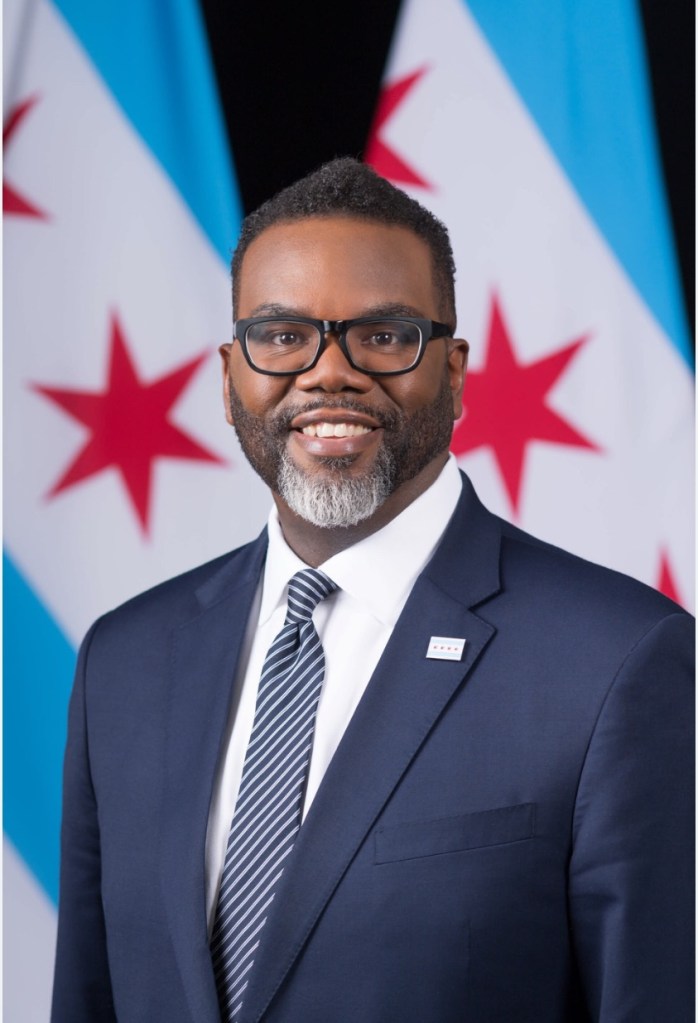
Mayor Johnson, we need you to lead like an educator

(This piece was written Jan. 2025 and published on The Triibe)

Dear Mayor Brandon Johnson,

Do you remember getting your classroom ready before starting your first year of teaching? Thinking about the placement of every poster, every anchor chart, every seating arrangement and putting up bulletin boards. Wondering, what will the students be like? It’s a magical and terrifying feeling; having to remind yourself that you are highly qualified, and that you have degrees and certifications. You had your internship experience as a student teacher, where you still needed to reach out to experienced teachers for guidance. But even then, the questions and doubts probably crept in — will I be able to do this?

I imagine before you officially took office in 2023, you had similar feelings about becoming mayor. Maybe you looked around and thought, “Damn, I really just got elected to be mayor with the support and help of so many people in this great city.” You tasked experts in all forms of city policy to craft your transition plans. You picked your advisors, and when things slowed down at night or in the early morning, perhaps you asked yourself, “will I be able to do this?”

During your first year as mayor, you came out like a first year teacher with high energy and lots of excitement. You passed historic legislation in Chicago. You ended subminimum wage for tipped workers, began the work to reopen mental health clinics, and expanded paid time off for workers. You followed your campaign promise to end the flawed Shotspotter program, revived the city’s department of the environment, and you were the deciding vote in calling for a ceasefire in Gaza.  

In that first year, you let people know that your policies would be people centered, unlike the policies of recent past mayors Richard M. Daley, Lori Lightfoot and Rahm Emanuel. The people who elected you were happy; the people who didn’t vote for you got angry. 

Now you’re navigating year two of your term. Just like year two of teaching, things are harder. The shine of year one has faded away. And you still haven’t figured out exactly how to be as effective as possible yet. Having a Chicago Public Schools (CPS) CEO who has been fired, yet suing over the termination as he refuses to leave does not help. 

In teaching, as long as you show the students that you care and show up to work every day to connect and teach, the students are on your side. 

Unfortunately, our society is not like that. You are the enemy to the machine politics of Chicagoand scary to the status quo. 

You are a Black father with a beautiful Black wife, raising three beautiful children on the West Side of Chicago. That fact alone makes some people automatically not like you. You are educated. You are a former teacher and you care deeply about this city. You send your children to public schools. Your wife comes to all the school conferences.

You disrupt their stereotype of what it means to be a Black man from the West Side of Chicago. 

Those who hate you are angry because you center people and policies that benefit normal Chicagoans. This change of focus counters how our city has been run. 

The attacks on you this year have been intense and you have made some major missteps that didn’t help. Your approval rating is low. In short, the first semester of year two is kicking your butt. 

But just like in teaching, Mayor Johnson, you can turn this ship around with some adjustments in your approach: lean into trusted advisors, and revisit your transition plans and goals (these are your curriculum and unit maps). 

I remember sitting with you at a dinner table about eight months before you were elected. You were cracking jokes and being brilliant. You were down to Earth and had a vision. The pressures have clearly changed since then, but we need you to lead the way you envisioned leading. We need you to lead with logic, to lean into the hard, and convey love.

The people who elected you are looking for you to fight. We need you to stand up to President Trump. We need you to fight for our students and transform our public school system. We need you to continue to show that safety isn’t through more police but investment in communities. We need you to hold weekly press conferences. We need you to staff your team right. We need you to make City Hall a place where your team, while dealing with insane levels of stress, wants to be. 

We need you to pick the right people for your media team. Make people have no choice but to trust you. We need to see you and hear you, so we can rally for you again.

We need you to start making a comeback now.

You are under attack because you represent a different America. One led by a teacher. One led by an organizer. One led by a Black dad, son of a pastor from the West Side.

You’ve become a proxy for the Chicago Teachers Union. The CTU has become a proxy for all the racist misogynists out there. 

There’s nothing wrong with fighting for public education, for housing, for regular people. That’s why we elected you. We need you to lean into those things! We need you to lead like an experienced teacher, who has heard and seen it all.

Sincerely,

Dave Stieber

P.S. Take time to talk to the local media. The vast majority of them deserve the chance to ask you questions and you owe that to the residents of our city as well.

Published via The Triibe in Jan. of 2025 and viewable here

CTU’s contract demands are a love letter to Chicago

Ask any educator why they teach or work in a school in any capacity and they will undoubtedly say it is because of the kids — the students who make us laugh, make us plan and replan our lessons, make us stay late to sponsor clubs and coach teams. The students are what bring joy, occasional frustration, and love to our profession. 

Educators teach because we love our jobs and we know our students deserve so much more. Since Karen Lewis helped transform the Chicago Teachers Union (CTU), Chicago Public Schools (CPS) educators also realized that it is not just enough to advocate for our students in the school buildings; we must advocate for our students in their communities. CPS educators want our students to have access to neighborhoods with housing, jobs, and opportunity. Chicago’s educators are bargaining for the common good of our students’ lives in and out of school. 

Our current contract demands are a love letter to the communities in which we teach, to the communities in which we live. We’ve written a love letter to Chicago. 

For the past 18 years, I’ve been a CPS teacher and from my first day of teaching in 2007 to now, I’ve never seen a school that has everything our students deserve. I’ve learned quickly that, in order to get what our students deserve, you have to fight tooth and nail for literally everything — from textbooks and computers, nurses, and functioning athletic facilities to libraries and social workers. You have to fight to get crumbling asbestos floor and ceiling tiles out of the school, to get new HVAC systems so your students don’t freeze or swelter, to get your school cleaned, to offer quality lunch for students, and to keep your school from being closed by terrible politicians trying to privatize our public schools. 

Now in 2024, we’re still fighting. We have a supportive mayor in City Hall with Brandon Johnson. We have supportive people in many elected positions in the city; however, the leader in Chicago Public Schools and his associates are still not thinking innovatively. 

The leadership of our school district should be fighting for state revenue for CPS. The district should be leading, so we don’t have these generational inequities in CPS. The district should be leading to make sure every kid has transportation to school. Educators are really good at planning, leading, and making positive changes for our students, schools and communities. Yet, the teachers are not only working every day to teach and educate our students, we are also having to work and teach and educate the people who are supposed to run our district. It’s beyond offensive; it’s exhausting. 

Pedro Martinez and the leaders of Chicago Public Schools need to step up. They need to join educators, parents, and the community, and fight for true educational equity, or they need to step back and sit down and let us bring in some real leaders, who aren’t afraid. 

I became a social studies teacher because I was inspired by people advocating for causes they believe in. Every person I look up to in my life has fought for things they shouldn’t have had to fight for. Whether they were afraid or not, they still did it, and they found people who were willing to fight with them. That’s what leaders do. 

I have worked at three neighborhood CPS schools on the South Side. My students have never had the resources that they deserved in any of those schools. 

In April, the Chicago Teachers Union submitted our contract proposals for our next contract. I am a part of CTU’s 50-person Big Bargaining Team that meets with leadership of CPS. We present our proposals, explain the current conditions in our schools, and how our proposals will help transform our district. We have even pushed for and held public bargaining sessions that are live streamed so the public can more easily see our proposals and the process. 

The negotiations are going much slower than they should be. Even though we have city officials observing at every session, CPS leaders are not agreeing to, or even countering, too many of our proposals. We are at a stalemate and the question is why? We have a mayor who supports the demands but a CPS CEO in Pedro Martinez who is the hurdle for transformative change for our district. 

The leadership of CPS is acting like they work for former mayor Rahm Emanuel, and not for Mayor Johnson, who actually wants to improve public education. So if the issue isn’t with the mayor, then the issue is with CPS leadership. 

CPS should have a leader who makes things happen, who understands that 30,000 CPS educators want a partner who understands our students’ needs and is committed to making the vision happen. The state owes more money. Let’s collaboratively go fight and get money from the state that we deserve. Let’s collectively create a vision, plan, and transform our schools.

Our governor J.B. Pritzker was in consideration to be a candidate for vice president and he has done some good things for our state, but unfortunately, like far too many traditional Democrats in Illinois, his help with public education leaves a lot to be desired. 

Illinois has never funded CPS appropriately, based on their own funding formula, and now that we’re asking for more money for our schools, Pritzker refers to it as a “bail out.” Stacy Davis Gates, elected president of the Chicago Teachers Union, says to our CTU members, “You can’t bail out something that you never funded to begin with.”

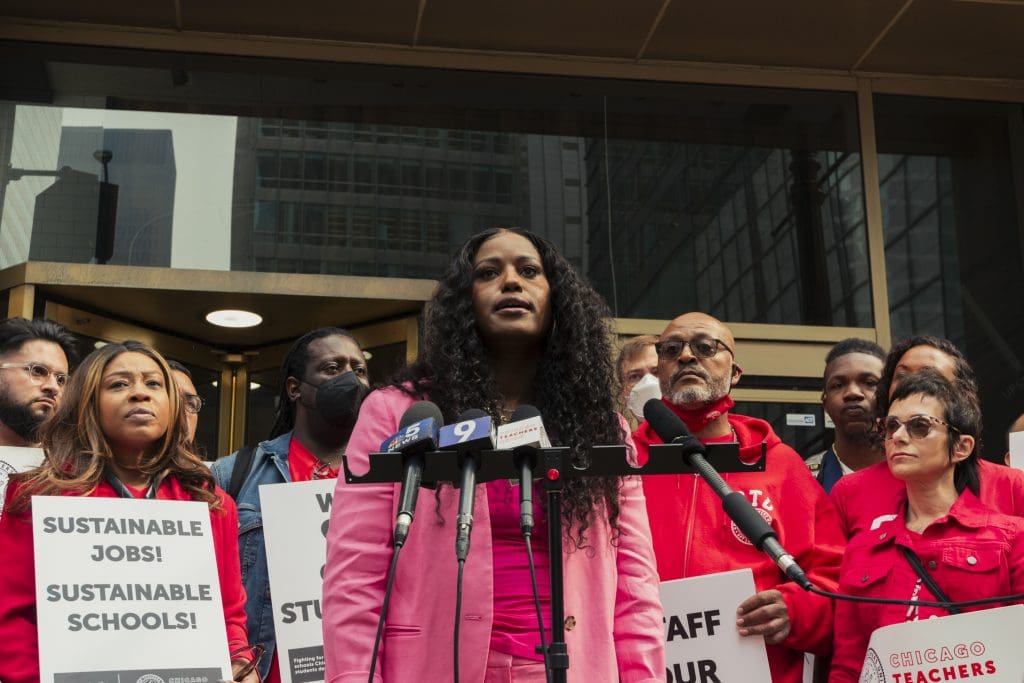
Stacy Davis Gates, president of the Chicago Teachers Union, spoke at the Chicago Teacher's Union (CTU) press conference near Chicago Public School Headquarters downtown on June 28, 2023. Photo by Tyger Ligon for The TRiiBE®
Stacy Davis Gates, president of the Chicago Teachers Union, spoke at the Chicago Teacher’s Union (CTU) press conference near Chicago Public School Headquarters downtown on June 28, 2023. Photo by Tyger Ligon for The TRiiBE®

On the state level, we want Gov. Pritzker and the government of Illinois to actually fully fund CPS and Illinois Public Schools. Selected vice presidential candidate Tim Walz fully funded Minnesota Public Schools. We want Gov. Pritzker to do the same here. Our contract negotiations between CPS and CTU are not with greedy teachers, demanding unreasonable things; we are asking for schools with safe drinking water in the water fountains and classrooms that are at a temperature that students can learn in. 

We are asking for the city and the district to lead in retaining and hiring teachers in Chicago. We need the district to believe there is a national and local teacher shortage, which there is.  

We need them to realize the current teacher evaluation system, REACH, is terrible and is not designed to help teachers grow nor improve our craft, but is just a “gotcha” system of bureaucratic checkpoints. REACH is the system in which educators are evaluated for their teaching, except this system has been proven flawed and negatively impacts Black educators specifically and educators who work in schools that need significantly more support. Be innovative, CPS; help us create a new system that educators and principals will actually find useful and help teachers continue to improve. 

At times, CPS seems like they could care less during the negotiations. We have provided proposals to transform the classroom, to reduce class size, to provide more support for our students, proposals to provide housing for our students, and to reduce our environmental impact with Green Schools proposals

Our contract demands were created by reading through thousands of proposals submitted by the 30,000 CTU educators across this city. The demands range from the diapering of pre-k students, making the school day better for elementary schools, and helping educators improve our practice, to housing our students and fighting to make our planet better for our students. 

My partner and I have two children who attend CPS. Being a CPS parent is probably harder than being a teacher at times. We have to navigate the super confusing system that is CPS. We had to realize how much of a struggle it is to find a school that works for our kids, to find a school that is well run, well resourced, well supported and safe. While we have an insider advantage because we are both teachers, trying to figure out CPS is still hard. The educators who work in the building aren’t the problem, it is the bureaucracy of CPS that is unwilling to change. 

Parents want a school that has every opportunity and resource that they can get. That is why parents from around the city will do anything they can to get their kids into certain schools, because parents know that certain schools have the resources that every single school should have. Even the schools that have more programs don’t have enough funding; those schools have high student fees for all the activities that exist at the schools. Those schools have only enough funding to hire the teachers to lead those amazing dance programs, drama productions, marching bands, choir, art programs and athletic programs. The school actually can’t fund all the greatness that comes out of all these programs — like recitals, costumes, instruments, microphones, travel expenses, competitions, art supplies- so they make the parents pay fees for those opportunities and experiences.  

We want the district to fully fund our schools, not make the parents pay the difference. We want all schools to have the programs and resources parents want, not just the few selective enrollment ones.

Pay attention to how CPS portrays the contract bargaining sessions. I’ve been in the meetings. I’ve been in the rooms. I’ve watched CPS say no to the things that don’t cost a dollar. I’ve seen CPS leaders not offer to advocate for more funding. I’ve seen CPS leaders claim pre-packaged curriculum is the greatest thing ever and that teachers aren’t really that good. 

CPS says there’s no money. We’ve heard this claim for the past 18 years and for generations before that. Chicagoans have learned that a budget is a political document, and that in order to reallocate money that the city has in another bucket into public schools, actions need to be taken. Students had to protest, boycott CPS and have freedom days in the 1960s to get rid of Willis wagons for Black students. We have seen TIF funds be used for the beautification of already beautiful neighborhoods, but not for our schools. It is beyond time that our district is actually willing to lead and be innovative. “Good enough” shouldn’t even be a phrase that exists in a public school leader’s vocabulary. Read the op-ed in the Tribune by Stacy Davis Gates calling on Pedro Martinez to truly lead.  

This next contract that we get with Chicago Public Schools isn’t teachers trying to take over, it’s a movement to finally give teachers, students, schools, communities, and everybody that we’re in coalition with, the sought after justice that’s been fought for in Chicago’s educational struggle for generations. 

Educators live in Chicago, work in Chicago, send our kids to Chicago Public Schools, and pay taxes. Yet, the elite and think tanks who want to privatize education attempt to portray us as greedy monsters who don’t care about our students. We’ve lost students and have seen empty desks. We go to therapy. We’ve lost the color in our hair. We stay late, we come in early, we coach, and we lead clubs for free. We work with every single student that comes into our door; we don’t turn them away. We lead clothing drives and college fairs. We help students land scholarships and acceptances. We meticulously plan our lessons to accommodate every student’s needs. 

If you think some Astroturf organization, like the Illinois Policy Institute, is going to last any longer than any of its privatizing predecessors, then you are sadly mistaken. These predatory privatizers have no real care or real stakes within Chicago Public Schools; they just want to benefit off of scandalous loan rates or find funds for their CEO pals who want to use a non-unionized charter school to pad their portfolio. Talk about scammers. 

On the city level, we want the school leadership of Chicago to follow the plans that our mayor, a parent with children in Chicago Public Schools and former CPS teacher, put forth. That’s the vision for CPS to work in coalition with educators, parents, and community members. We need CPS to stop acting like it’s 1995 and realize it’s about to be 2025.

Our proposals are a love letter to this city. Fighting for our public school system is our love language and this is our love letter to Chicago.

This piece was originally published on the Triibe, to view it there click here.

Our Union Called for a Cease-Fire. It’s About Our Students.

Why the membership of the Chicago Teachers Union voted overwhelmingly to support a cease-fire—and how we see ourselves as part of a larger labor movement for peace and justice.

DAVE STIEBER JANUARY 18, 2024

If you teach, your absolute worst nightmare is that something tragic happens to your students. Teachers don’t just think about students when they are in front of us; we think about them throughout each day and night. They are a central part of our lives. 

When a young person steps into our classroom, the first thing we do is work to connect. That’s the best way students learn. When a student doesn’t live up to their own potential, we take it personally. We obsess about what went wrong.

Caring about students also means deliberately caring about the world we are helping them grow into. It has never been enough to only teach students when they are in the classroom; we have to advocate for them all the time.

For too many of us teachers, we have also had to wrestle with how to respond when something tragic happens to our students. And tragedy strikes at a devastatingly regular pace. Losing one student is unbearable; I’ve lost damn near a classroom over my 17 years, from intra-communal violence, police violence and tragic accidents. Thinking about and seeing the pain their families experience is soul-shattering.

Fundamentally, educators are really only in this profession because we care so deeply about young people and the promise they hold — not in our communities, but across the globe.

Watching what is happening in Gaza has been soul-shattering too. Some 10,000 children have been killed since October 7; many are now without parents; some have been held hostage. Every one of them is someone’s child, someone’s loved one, someone’s student.

I’ve been told directly that teachers need to stick to teaching, that international matters aren’t something we should talk about, and that educators don’t have any clue or right to comment on issues that may seem so far away.

But we know what it is like to lose students, to see young people suffer. Whether that child is in Chicago, Israel, Palestine or anywhere in the world, we don’t want anyone else to experience this pain. My partner encouraged me to finally start therapy because I lost so many students that I was no longer able to cope with seeing the empty desks, the social media eulogies, the funerals.

That’s why, for the first time in the history of the Chicago Teachers Union (CTU), we approved a resolution on November 1 to improve how we support students during world conflicts. That’s why we also approved another resolution, to add our name to a letter with other unions calling for an immediate cease-fire in Israel and Palestine. This decision wasn’t impulsive; our members met and thoroughly considered and discussed the various angles and issues. Our hundreds of delegates, all educators, further discussed and voted democratically. The support was nearly unanimous.

But I also need to note that, even though there was so much support, this decision wasn’t easy. Union leadership is in agreement with the resolution at its core, but it is naturally concerned about potential blowback — blowback we have seen come to so many people and organizations who have called for an end to the violence, blowback that our union has received because many on the Right are upset with what we’ve been able to achieve. 

The son of our president, Stacy Davis Gates, has become a target, and her parents’ home is under police supervision because of threats. Jackson Potter, our vice president, who is Jewish, has received antisemitic threats.

There’s also concern about how the CTU might be looked at going forward. Would elected officials stop supporting us in Springfield? Would they no longer endorse legislation we put forward? We had these internal discussions and thought about our values. As Potter said at a rally in Chicago in November, organized in part by Jewish Voice for Peace and IfNotNow: ​“As a fighting union dedicated to the adherence of human rights, our most important representative body voted overwhelmingly in favor of a cease-fire to stop the senseless bloodshed of innocents and call for the return of all hostages.”

A big part of our motivation is that we know our students are watching the same videos and seeing the same news on TikTok and Instagram as we are. We can’t pretend like the issue is not affecting their lives, and we can’t pretend like youth in the United States don’t overwhelmingly want the violence to end. As always, our students are watching us and seeing if we will teach about what is happening. They know we’re not robots, and they wonder what our values are.

For me, too, it’s personal. My dad is a Vietnam combat veteran who was often emotionally unavailable growing up. Only after the Iraq War started, in 2003, did he meet and work with other veterans who were speaking out against wars; when my own kids were born, he finally started sharing more about his experiences. When my kids played, screamed or were loud, it took him back to a place he does not want to remember.

The killing of children and civilians, the bombing of cities, hospitals and schools, is not honorable. Death no matter where it takes place is unforgivable and destroys generations. A family doesn’t ever really come back from tragically losing a loved one.

This post was originally published on In These Times.

Teaching Through Trauma

This piece was published on The Triibe, to view it there please click here.

In my 16 years teaching in Chicago Public Schools (CPS), I have lost more students than years I have taught. During my teacher programs in college, I had fears surrounding how to create engaging lesson plans, how to make connections with students and how to help students who needed more support. I learned the basics of how to be a teacher in my college classes and then learned even more during student teaching (a.k.a. teaching internship) from experienced educators. My mom was an educator in Michigan, so I knew that teaching would be extremely rewarding and also extremely frustrating. The one thing I never learned, or was even remotely prepared for, was what to do when a student dies.

Everyone that I know and respect who works in school buildings always goes above and beyond for the students. We want to give our students every great school experience that we can. We try not to, but we think about lesson plans, grading and how to better connect with our students when we aren’t even at school, on weeknights and weekends. We dwell on that one kid who we haven’t been able to reach yet and think of ways to connect with them, to engage them in our class.

So how does an educator even begin to cope when a desk that was once filled by a student that we knew and built relationships with goes empty because that young person is no longer alive. How do we cope when we taught and mentored a student and saw them graduate only to see on social media that their life is over?

These are things that we are never taught and there is no support for in our school systems across the country. In Chicago, our schools are already criminally short on social workers and counselors. We went on strike in 2019 for eleven days in part so we could make sure every Chicago Public School had a social worker by 2024. The National Association of Social Workers says schools that are experiencing high levels of trauma should have one social worker for every 50 students

In Chicago, because of the 2019 strike we have one social worker for every 520 students! Chicago Public Schools has four crisis counselors for over 340,000 students. As I have learned through the deaths of my own students, these four crisis counselors go to a school to try to help the students dealing with the loss of a classmate and friend. The crisis counselors come for a day and then leave, but that school’s staff is supposed to pick up the pieces after that, with no additional sustained support.

The first student I ever lost passed away on a cold January night in 2011. My assistant principal called me early the next morning to tell me that Trevell was killed. I taught him as a freshman in 2007; the first ever class of students that I taught. 

I remember Trevell giving a speech in my class about the need for Black-owned businesses in Woodlawn and Englewood. When Trevell was killed as a senior, he was preparing to head to college. I remember going to school and worrying more about my students and how to make sure they were okay. I — and every adult in the building — tried to be their therapist and support while ignoring our own pain. That is a cycle that is repeated time and time again in school buildings across this city, every time a student dies.

Since then, I keep a list of students’ names in my phone who I taught that have died. That list continues to grow. It’s now at 22. These are the students I taught and talked to daily, who I cared for, was playfully annoyed by and loved deeply. 

These students are no longer here because of intra-communal violence, police violence and tragic accidents. In my head, when the number of students on the list on my phone would climb, I would start to get anxious. As it approached ten student deaths, I said to myself, “I am not sure how I will react if I ever have ten students die.” Ten deaths came, nothing changed; students, staff and families still grieved, but the trauma of loss compounded. 

For the past 16 years, I’ve honestly tried not to think about these losses, let alone talk about them, because if I bring them up, the emotions overwhelm me. It is like a fog rests on my brain. After many losses and much encouragement, I hesitantly started seeing a therapist because of student loss. I sat for an hour not wanting to tell my therapist about why I was even there because it was so painful. 

I’ve also been hesitant to talk about student loss publicly because I didn’t feel worthy of the deep pain I felt for them; these students had families and loved ones that were experiencing the loss much more profoundly than I was. I also worried about people commenting horrible things about my students if I shared my grief for them publicly. I have grown used to criticism and trolls hating on teachers, but when people blame my students for their own deaths, that hits different. 

The cycle of violence and trauma continues, prayers are given and children are blamed. Children are blamed for being with the wrong people or making the wrong choices. There are no “good” or “bad” kids. They are just kids. We must break the habit of trying to justify how sad we should feel when a student dies, depending on their goodness level. It is as if when a kid who has all the support that they need dies, then we should feel sadder than when a kid who should be getting more support dies. It is as if a child’s struggle absolves us of the same level of sadness. Violence and tragedy have become so normalized in our city and society that many immediately try to determine if the life that was lost essentially “deserved” it.

Everytime a student has died in this city, the mayor — whether it be Daley, Rahm or Lightfoot — has said how sad they are and sent their prayers, but we need more counselors, social workers and mental-health providers for the students in our schools. Educators have been demanding an increase in those supports since I started teaching in 2007. Officials are not developing policies to help create safer communities for our kids to live and thrive in. 

The situation has not improved since we lost Trevell. Students are still being killed, as we have seen this year, sometimes right outside the schools they attend.  I don’t want educators who have never experienced student loss to have to experience this. I want our students to be safe and I want politicians who will actually invest in neighborhoods, with job creation and youth activities, and invest resources into our schools for mental health services for our students, not more police.

For me, when any young person in this city dies, I instantly start to think about each and every student’s empty desk in my classroom.  I think about the balloon releases,  social media posts and funerals. I worry about losing more. I worry about my colleagues across the city, teaching through the trauma caused by the loss of students. 

The trauma of student loss makes me not only remember the students who I have lost but also tragically makes me afraid to lose the students who are in front of me. Through therapy, I have realized that I started to put distance between myself and students needing more support because I was picturing losing them and trying not to get attached. Honestly, this is likely the reason that I left other schools that I have worked at, because the likelihood of experiencing loss and more trauma was too high. My own therapy has kept me in the profession. I have learned how to work through the pain with a trained professional. Without therapy, I would be a distant father and spouse as the grief would consume me at times, and I likely would not be teaching.

What do educators do to survive this pain? What do we do when we are grieving but trying to be strong for our students, while at the same time, trying not to let ourselves picture losing the students in front of us too? 

In addition to the tragedies at Michele Clark and Benito Juarez high schools in 2022, my school experienced losing a student. I didn’t know this student personally, but hearing about his death made me think of every student who I had lost. Kanye, the student from Kenwood, was killed at the gas station where I used to get our family van repaired, at the corner where my partner and I lived during our first six years in the neighborhood, at the corner where my mom walks daily and the corner where our students buy snacks after school. A normal corner, outside a high school. 

I don’t want this or the next generation of teachers to have to figure out the coping mechanisms that I’ve learned. I don’t want this or the generation of students to fear just existing. We shouldn’t be experiencing loss in our schools or our communities. We should see politicians writing policy on the local and national level to create jobs, fund after-school programs, and at least double the required recommendations for counselors, psychologists and social workers in schools. We need to stop relying on teachers to counsel our students, and hire the trained experts. 

Every single student and staff member in our schools should be getting more support so we aren’t forced to fight this normalized violence and trauma alone. I’m thankful that the Chicago Teachers Union (CTU) is and has been fighting for wraparound services for our students and schools. Alder Rossana Rodriguez-Sanchez (33rd Ward) has written policy so that Chicagoans can get treatment, not more trauma.  I am thankful to organizations such as GoodKids MadCity that have concrete proposals like the Peace Book Ordinance to provide resources and plans to establish the practice of peace.

Before this school year started, I talked to my partner and told her I was going to try to open up more about student death. She asked if I could handle it, not because she thought I couldn’t, but because she knows the toll it takes on me to do so. I’ve realized that everything that’s hard to talk about is worth talking about. 

Hopes and wishes have their place, but not to replace actual policy and investment that our students have deserved for generations. There are no “bad” students, just failed policies put forth by bad leaders. And because of this, we all suffer.

Panel Discussing What Chicago’s Students Deserve in Schools, Instead of Police

It’s important to remember that as Chicago’s school buildings re-open, that students going back won’t be greeted with mental health experts. They will be met by police. We need to reimagine our schools and what supports our students should have to help them, instead of the looming threat of arrest against them. I was honored to be on a panel discussing what our students should have instead of police put on by Raise Your Hand Illinois. To watch the full panel featuring CPS students, parents, educators and elected officials click here. #CopsOutCPS #PoliceFreeSchools

On The Delve Podcast Discussing Schools Opening During Covid

I was interviewed on a new podcast to discuss why schools should only open remotely this fall. My interview starts just after 18 mins. in. Before is a principal from New York City Public Schools and after me is the head of the Milwaukee Educators Association.

Back on Fox32 Chicago Discussing the CPS Decision to finally be remote

After weeks of teachers, parents, and students expressing their fears with the proposed hybrid model by Chicago Public Schools, CPS announced they would start the school year remotely. I was asked back on Fox 32 to discuss that decision.

https://www.fox32chicago.com/video/837746